
Insights & Innovations
Explore expert advice, design inspiration, and latest bathroom innovations.
Ambient Light & Water
Deep dives into modern shower engineering and architectural wellness.

Architectural Elegance
Selecting the ideal freestanding bathtub for luxury residential spaces.
Future of Living
Discover how touchless technology and automation shape luxury spaces.
Choosing the right concealed shower system in 2026 requires more than comparing finishes and retail prices. Global buyers must examine water pressure, pipe standards, maintenance access, and installer capability before selecting a model. A brushed nickel control plate may look excellent online, yet perform poorly with hard water or fluctuating pressure.
This guide evaluates leading Concealed Shower Systems through practical use, technical specifications, and long-term reliability. It considers thermostatic cartridge response, outlet configuration, corrosion resistance, and compatibility with common G1/2 or region-specific connections. We also look at installation depth, service panels, warranty coverage, and available replacement parts. These details matter when a leaking valve sits behind finished tile.
Real-world conditions vary widely. A system suitable for a high-pressure European apartment may need adjustment in a low-pressure rural property. Some manufacturers publish impressive flow rates, but testing methods are not always identical. Buyers should verify the figures carefully. That point is easy to miss.
The recommendations balance design, safety, serviceability, and value for different markets. They are informed by manufacturer documentation, installer feedback, and the practical problems that appear after installation. Still, no product is perfect. Local water quality, building structure, and qualified installation can change the final result. Before purchasing, confirm regional compatibility and consult a licensed professional where required. A beautiful shower should also remain accessible, dependable, and easy to repair.
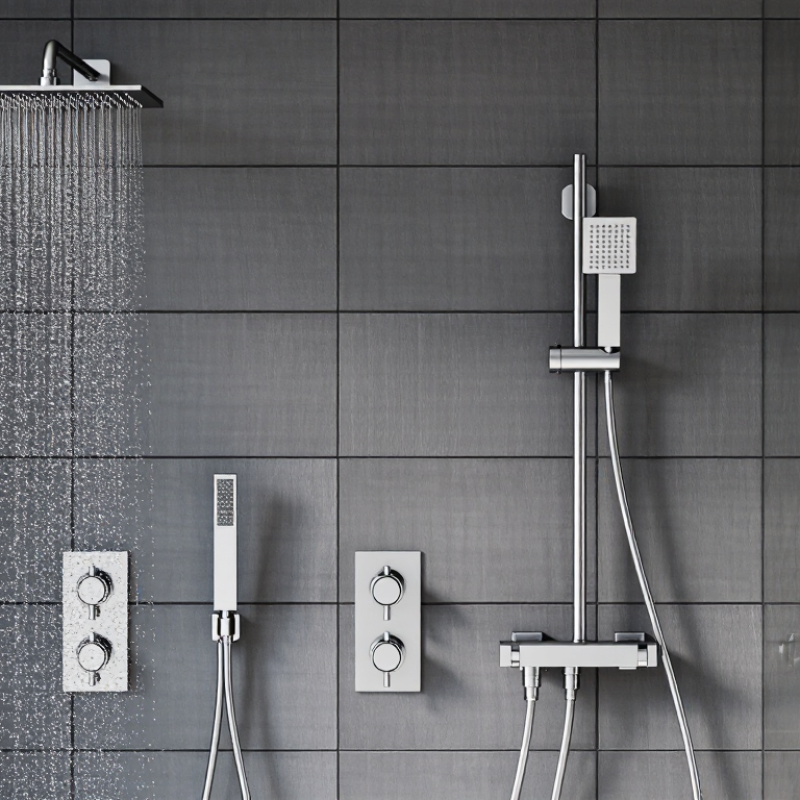
2026 Classification: Concealed Shower Systems by Valve Type, Outlets, and Flow
The 2026 best concealed shower systems should be classified by valve type, outlets, and flow. Pressure-balancing valves adjust hot and cold water automatically. They suit apartments and family bathrooms. Thermostatic valves control temperature more precisely. They are better for homes with children or unstable water pressure. In practice, a thermostatic cartridge feels safer, but it usually costs more and needs accurate installation.
Outlet planning matters. A basic system may combine a hand shower and overhead shower. Larger bathrooms can add body sprays or a ceiling outlet. Each outlet increases pipe demand. The U.S. Environmental Protection Agency limits WaterSense showerheads to 2.0 gallons per minute, or 7.6 liters per minute. Systems designed around this rate can reduce water use without making spray performance weak. However, actual flow depends on pressure, pipe diameter, and multiple outlets running together. Product charts alone can mislead.
Tips: Check the valve’s minimum pressure and service access before covering the wall. Read independent test reports, not only showroom claims. The 2024 Houzz Bathroom Trends Study shows continued investment in upgraded shower spaces, but design preference is not engineering proof. Leave a removable access panel when possible. I have seen elegant installations fail because filters were unreachable. That detail deserves more attention.
| System Classification | Valve Type | Typical Outlet Combination | Primary Control | Typical Flow Range* | Temperature Protection | Recommended Installation Context | Key Buyer Considerations |
|---|---|---|---|---|---|---|---|
| Single-Outlet Basic System | Concealed single-control pressure-balancing valve | One fixed shower head or one hand shower | Combined temperature and volume handle | 6–9 L/min | Pressure balancing; maximum temperature stop may be included | Guest bathrooms, apartments, and compact shower areas | Simple plumbing layout, lower installation cost, and easy everyday operation |
| Single-Outlet Thermostatic System | Concealed thermostatic valve with integrated shut-off | One fixed shower head or one hand shower | Separate temperature and flow controls | 6–12 L/min | Thermostatic temperature regulation with anti-scald safety stop | Family bathrooms and projects requiring stable outlet temperature | Check the factory temperature setting and compatibility with local hot-water systems |
| Dual-Outlet Shower System | Two-way concealed diverter valve with pressure-balancing or thermostatic control | Fixed shower head plus hand shower | One control for temperature and flow; separate diverter for outlet selection | 6–12 L/min per active outlet | Depends on the selected valve; thermostatic versions provide more stable control | Standard residential bathrooms and hotel guest rooms | Confirm whether outlets can operate separately or simultaneously |
| Three-Outlet Shower System | Three-way thermostatic valve or thermostatic valve with separate diverter | Fixed shower head, hand shower, and body jets | Independent outlet selection with separate temperature regulation | 6–15 L/min per active outlet | Thermostatic anti-scald control is generally preferred | Medium and large residential bathrooms | Requires sufficient water pressure, correctly sized pipework, and accessible service components |
| Multi-Outlet Wellness System | Thermostatic mixer with multiple volume controls or modular diverter valves | Overhead shower, hand shower, body jets, and bath filler | Separate controls for temperature, volume, and outlet selection | 12–25 L/min total, depending on simultaneous use | Thermostatic control with anti-scald stop recommended | Luxury residential bathrooms, spas, and premium hospitality projects | Hydraulic demand, hot-water recovery capacity, and access to serviceable cartridge parts are critical |
| Digital Concealed System | Electronic mixing valve with digital controller | Multiple outlets, such as overhead shower, hand shower, and body jets | Push-button, touch, or remote digital control | 6–20 L/min total, system-dependent | Electronic temperature sensing with programmable safety limit | Smart homes, accessible bathrooms, and high-end hospitality installations | Requires dependable power, compatible control wiring, moisture protection, and qualified commissioning |
| Pressure-Balancing System | Pressure-balancing concealed mixing valve | Usually one outlet; some configurations include a diverter | Single handle or lever | 6–12 L/min | Balances hot and cold pressure changes; temperature limit stop is commonly used | Regions where supply pressure may fluctuate | Generally simpler than thermostatic systems; actual temperature may vary when supply temperature changes |
| Thermostatic High-Comfort System | Concealed thermostatic mixing valve | One to three outlets, depending on valve and diverter configuration | Separate temperature and volume controls | 6–20 L/min total | Maintains selected temperature within the valve's operating range | Family homes, hotels, healthcare facilities, and accessible bathrooms | Verify minimum flow, hot-water temperature, cold-water pressure, and maximum operating pressure |
| Low-Flow Water-Efficient System | Pressure-balancing or thermostatic valve with flow-restricted outlets | Low-flow fixed shower head and/or hand shower | Single or dual control | 4–7.5 L/min | Valve-dependent; thermostatic control is preferred for comfort at reduced flow | Water-stressed regions, green buildings, and hospitality projects targeting lower consumption | Low-flow outlets must be matched with the water heater and pump; performance depends on available pressure |
| High-Flow Rain Shower System | High-capacity concealed thermostatic valve or separate volume-control valve | Large overhead rain shower, often combined with a hand shower | Separate temperature and high-capacity flow controls | 12–25 L/min | Thermostatic control with anti-scald stop recommended | Large bathrooms, resorts, wellness facilities, and premium residential projects | Confirm pipe diameter, flow capacity, hot-water storage, drainage capacity, and local water-efficiency rules |
| Commercial Heavy-Duty System | Serviceable thermostatic valve with commercial-grade diverter or volume controls | Hand shower, fixed shower head, and optional institutional outlet | Separate temperature and flow controls | 8–18 L/min | Thermostatic anti-scald protection with accessible maintenance components | Hotels, gyms, dormitories, healthcare, and public shower facilities | Prioritize replaceable cartridges, cleaning access, tamper resistance, spare-part availability, and local compliance |
FAQS
It delivers approximately 7.6 litres per minute. A six-minute shower uses about 36 litres. An eight-minute shower uses roughly 61 litres. The comparison is practical, not perfect.
A 6 L/min model uses about 48 litres.
No. Lower flow can feel weak when household pressure is poor. A dense spray depends on pressure, pipe size, and outlet design. Comfort is not automatic. I might prefer 7.6 L/min, but individual expectations differ.
Test the complete concealed system, including the valve, handset, overhead outlet, and diverter. Place a bucket under the outlet for one minute. Measure flow at normal pressure. Repeat while another tap is running. Test it twice.
Many homes operate between 1.5 and 3 bar. Apartments, hotels, and rural properties may differ. Request flow results at low and high pressure. A narrow pipe can reduce performance behind the wall.
Solid brass generally offers strong valve construction. 304 stainless steel suits many residential bathrooms. 316 stainless steel may better resist salt exposure near coasts. Inspect cartridges, connectors, fasteners, and sealing parts separately. Plastic parts require heat-resistance checks.
Confirm separate coverage for valves, finishes, and thermostatic cartridges. Read exclusions carefully, especially those covering installation mistakes. Certification documents should match the destination market. Request test reports and material-contact information. A printed symbol proves little.
Measure wall depth and pipe positions before ordering. Leave access for servicing concealed components. Photograph connections before closing the wall. Check local connection standards and flow requirements. Details matter.
Often, it balances water use and spray comfort. However, pressure conditions and user preferences can change the result. A 6 L/min model may save more water but feel disappointing. A 9 L/min model may feel better while consuming more. My preference could be wrong without a real pressure test.
Conclusion
This 2026 guide to Concealed Shower Systems helps global buyers compare products by valve type, outlet configuration, and water-flow performance. It explains how thermostatic, pressure-balancing, and diverter valves affect control, while comparing the WaterSense 2.0 gpm benchmark with efficient 6–9 L/min models. Buyers can also evaluate spray outlets, hand showers, overhead showers, and combined configurations according to household needs and available water pressure.
Safety and installation are equally important. Before purchase, verify compliance with ASSE 1016 or EN 1111, along with a reliable 38°C temperature stop where appropriate. Check G1/2 connections, compatible 15–20 mm pipework, service access, and sufficient wall depth for maintenance. The final buyer scorecard should consider durable materials, suitable pressure ranges, warranty coverage, testing documentation, and internationally recognized certifications. A balanced assessment of performance, safety, installation requirements, and long-term support can help buyers select a dependable system for different markets and building conditions.