

Insights & Innovations
Explore expert advice, design inspiration, and latest bathroom innovations.

Ambient Light & Water
Deep dives into modern shower engineering and architectural wellness.

Architectural Elegance
Selecting the ideal freestanding bathtub for luxury residential spaces.

Future of Living
Discover how touchless technology and automation shape luxury spaces.
Choosing Thermostatic Shower Diverters is about more than matching a finish to your bathroom. The right diverter directs water between outlets while a thermostatic valve helps maintain a steady temperature. That matters when someone flushes a toilet or turns on a tap nearby. A sudden burst of cold water is no small annoyance.
Plumbing and heating expert Richard Trethewey is a useful reference point for practical, safety-minded decisions. I can’t verify a verbatim statement from him on diverter selection, so this guide won’t invent one. Its working principle is simple: “Choose dependable temperature control before decorative details.” Treat that as an editorial summary, not a direct quotation. A product’s polished handle may catch your eye; the valve’s compatibility, flow requirements, and accessible service parts deserve equal attention.
Look closely at the details. Is the diverter designed for a showerhead and handheld spray, or for several outlets? Does its valve suit your home’s water pressure and existing pipework? Check the manufacturer’s installation guidance, warranty, and replacement-part availability. If the controls feel stiff in a showroom, imagine adjusting them with wet hands. Small clues count.
There is no universal best choice. A setup that works beautifully in one bathroom may disappoint in another. Even careful planning can miss something. Compare the intended outlets, ask a qualified installer about compatibility, and choose controls you can operate comfortably. A little doubt is useful; it encourages better questions before the wall is tiled.
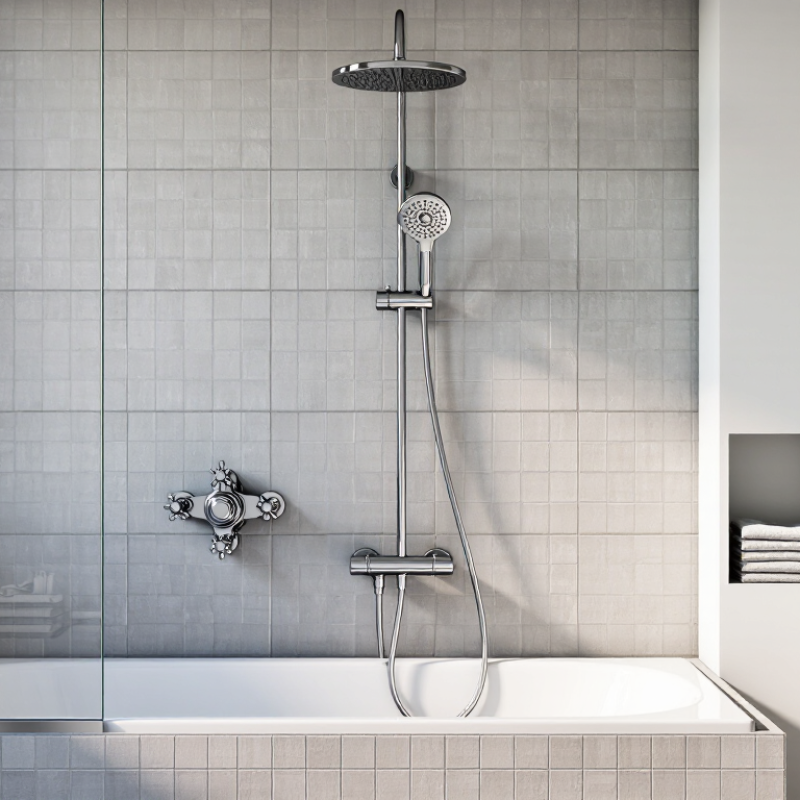
Understand How Thermostatic Shower Diverters Work
A thermostatic shower diverter manages water temperature and directs flow to different outlets, such as an overhead shower or handheld spray. In many systems, a thermostatic cartridge blends hot and cold water before the diverter sends it onward. The exact layout varies, so the controls may be separate or built into one fitting.
Inside the cartridge, a temperature-sensitive element responds as the water changes. It adjusts the hot and cold supply to keep the mixed water near the selected setting. If cold-water pressure drops, some designs reduce or stop the hot flow to help limit sudden scalding. That matters. It is a safety feature, not a substitute for careful temperature adjustment.
The diverter works differently: turning its handle redirects water between outlets. At startup, water already sitting in the pipe may feel cooler or hotter for a moment. Not magic. Regularly removing mineral deposits from the showerhead can help maintain steady flow, while a worn cartridge may cause temperature swings or difficult control. If the controls behave inconsistently, the fitting’s instructions can clarify whether the cartridge or diverter needs inspection.
How to Choose Thermostatic Shower Diverters - Understand How Thermostatic Shower Diverters Work
| Feature | How It Works | What to Check When Choosing | Practical Guidance |
|---|---|---|---|
| Thermostatic temperature control | A thermostatic element blends hot and cold water and adjusts the mix when supply conditions change, helping maintain the selected outlet temperature. | Check the valve’s stated operating range, inlet-temperature requirements, and compatibility with the home’s hot-water system. | Temperature stability depends on adequate water supplies and correct installation; it cannot compensate for every plumbing fault or supply interruption. |
| Diverter function | A diverter routes mixed water to a selected outlet, such as an overhead shower, a hand shower, or a bath spout. | Count the outlets you need and confirm whether the controls select one outlet at a time or allow more than one to run together. | The number of outlets and simultaneous-flow options varies by valve design. Do not assume that every outlet can operate at once. |
| Separate controls | Many systems have one control for temperature and another for flow or outlet selection. Some combine these functions in a single control. | Choose a control layout that is clear to use and suits the available wall space and installation arrangement. | A separate temperature control can make it easier to return to a familiar setting, but control operation differs between models. |
| Temperature stop | Some thermostatic valves include a safety stop that resists turning the temperature control beyond a set point without an override action. | Check whether a stop is included, whether it can be adjusted, and how the override works. | A stop is an added safeguard, not a substitute for supervision or checking water temperature. Settings and features vary by product. |
| Water pressure and flow | The valve needs suitable hot- and cold-water supply conditions to deliver stable temperature and useful flow. | Compare the product’s minimum and maximum pressure requirements with the property’s measured supply conditions. | Low or uneven pressure, restrictive pipework, or competing water use can affect performance. Follow the manufacturer’s installation specifications. |
| Hot-water system compatibility | Different valves are designed for particular water-heating and plumbing arrangements. | Confirm compatibility with the water heater or boiler, stored or instantaneous hot water, and the plumbing configuration. | Do not select a valve based only on its appearance. Check the technical instructions or consult a qualified installer. |
| Installation type | Exposed valves sit on the wall, while concealed valves place much of the valve body behind the finished wall surface. | Consider access for pipe connections, wall depth, finished-wall thickness, and future servicing. | Concealed installations should include suitable access and be planned before tiling. Follow the supplied installation details. |
| Maintenance and service access | Thermostatic cartridges and filters may need inspection or cleaning if performance changes or water conditions cause buildup. | Check how the cartridge is accessed, whether service parts are available, and what routine maintenance is recommended. | Hard-water deposits and debris can affect moving parts. Isolate the water supply before servicing and follow the product instructions. |
| Best-fit selection | The right diverter combines temperature control, outlet selection, flow requirements, and a suitable installation format. | List the outlets, expected usage, water-system details, and preferred control arrangement before comparing specifications. | Prioritize verified compatibility and clear installation requirements over appearance alone; use a qualified professional when plumbing changes are needed. |
FAQS
The thermostatic cartridge blends hot and cold water. The diverter sends that water to an overhead shower, hand shower, or tub spout. Two separate jobs.
A temperature-sensitive element responds to changes in the mixed water. It adjusts the hot and cold supplies to keep water near your selected setting.
Some designs reduce or stop hot water if cold-water pressure drops. That helps limit temperature spikes, but it does not replace careful temperature adjustment.
A thermostatic valve responds to temperature changes. A pressure-balance valve responds to shifts in water pressure, such as when someone flushes a toilet. Small detail, but useful.
Water sitting in the pipes can feel different for a moment. Wait briefly before changing the temperature setting.
A two-way diverter switches flow between outlets. A three-way model may redirect or split flow, depending on its design. Check whether outlets can run together.
The outlets share available flow. A large overhead shower and a hand shower may both feel weaker when used together.
Compare flow figures at the pressure stated in the specifications. Also consider your pipe size, household pressure, and actual shower outlets. A chart cannot predict everything.
Mineral buildup on the showerhead can affect flow. A worn cartridge may cause temperature swings or stiff control. Check the fitting’s instructions before inspecting parts.
Conclusion
Choosing Thermostatic Shower Diverters starts with understanding how they maintain a consistent water temperature while directing water to different shower outlets. Consider your shower layout and decide how many outlets you need, such as a showerhead, handheld shower, or body sprays. Then compare control styles, available flow rates, and diverter types to find an arrangement that suits your daily routine and water supply.
Before making a choice, check that the unit is compatible with your existing plumbing and includes appropriate safety features, such as protection against sudden temperature changes. Also consider the materials, installation requirements, and ongoing maintenance. A carefully selected diverter can make the shower easier to use and help ensure reliable performance, provided it matches your bathroom’s setup and can be maintained properly.