
Featured Sanitaryware & Vessel Basin Catalog
Direct-from-factory bathware solutions engineered for international commercial specifications, hospitality developments, and luxury residential projects.
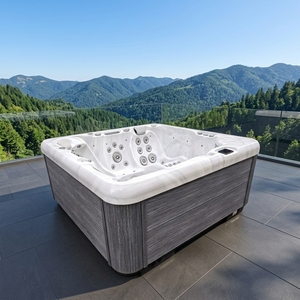
Acrylic Freestanding Square Hot Tub with Lounger Spa Bathtubs Massage Function
- Commercial Hydrotherapy Jets
- High-Density Acrylic Shell
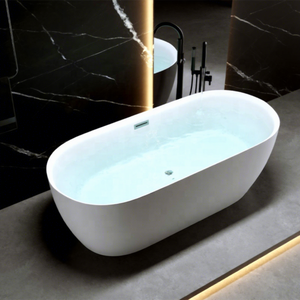
High Quality Oval Porcelain White Freestanding Soaking Bathtub
- Seamless Jointless Crafting
- Thermal Insulation Tech
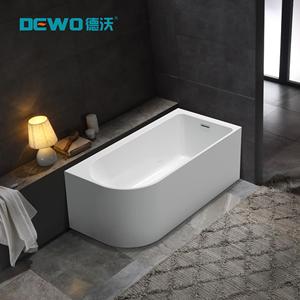
Indoor Apartment Compact Fluted Support Soaking Corner Bathtub
- Space-Saving Corner Layout
- Textured Fluted Exterior
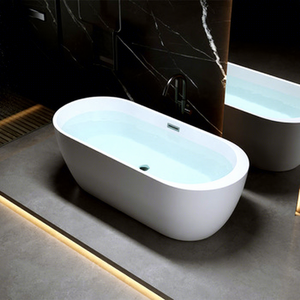
Wholesale Bathroom Modern White Acrylic Oval Soaking Standalone Bathtubs
- Ergonomic Lumbar Contour
- cUPC & CE Certified Build
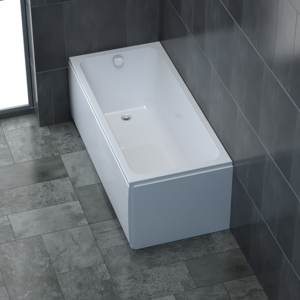
Acrylic Drop-in Rectangle Modern Soaking Bathtub with CE/cUPC
- Drop-in Architectural Flange
- Anti-Slip Bottom Profile
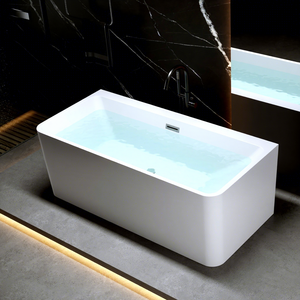
Hotel Luxury White Rectangle Acrylic Soaking Standalone Bathtub
- Deep Soaking Capacity
- Reinforced Fiber Frame
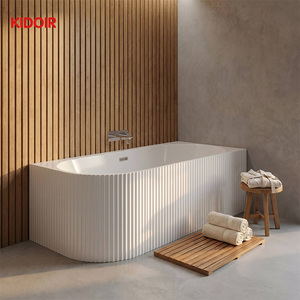
Kidoir Freestanding Fluted Exterior Luxury Spa Soaking Bathtub
- Custom OEM Finish Colors
- Architectural Ribbed Wall
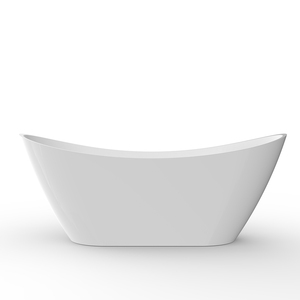
Modern Design Freestanding Stackable Soaking Bathtub for Hospitality
- Stackable Shipping Design
- Project Sourcing Discount
Executive B2B Sourcing Guide: Ceramic Vessel Sinks & Sanitaryware Export
In the rapidly evolving global sanitaryware ecosystem, procuring ceramic vessel sink basins requires rigorous technical evaluation beyond simple visual aesthetics. Modern B2B procurement managers, hotel developers, and architectural specifiers face complex challenges: balancing thermal shock resistance, ensuring structural vitrification, maintaining low breakage rates during container shipment, and complying with international water management codes (such as cUPC, CE, and ISO standards).
A ceramic vessel basin serves as the centerpiece of contemporary bathroom design. Mounted directly on top of a vanity counter, it demands perfect geometric symmetry, zero warpage along the bottom mounting plane, and an unblemished micro-crystal glazed surface that resists calcification, acidic cleaning agents, and high-frequency commercial use.
Comprehensive Technical Evaluation of Top 10 Suppliers & Exporters
To streamline vendor audits for international procurement teams, our senior engineering group evaluated over 50 global manufacturers based on 6 critical B2B operational benchmarks: Kiln Automation & Capacity, Glaze Thickness & Nano-Coating Quality, Dimensional Tolerance (<1.5mm), OEM/ODM Mold Customization, Supply Chain Traceability, and Export Compliance Certifications.
| Rank / Supplier Category | Primary Material Grade | Water Absorption Rate | Kiln Tech & Temp | OEM/ODM Flexibility | Global Certifications | B2B Sourcing Rating |
|---|---|---|---|---|---|---|
| 1. Colston Sanitaryware Co. | Micro-Crystal Vitreous China | <0.18% (Ultra-Low) | 1280°C Computerized Tunnel | Full Custom Molds / Cad 3D | cUPC, CE, ISO9001, WaterSense | 9.9 / 10 |
| 2. Premium European OEM Group | Fireclay Ceramic | <0.25% | 1250°C Shuttle Kiln | Limited Standard Catalog | CE, EN 14688, ISO14001 | 9.4 / 10 |
| 3. Chaozhou Enterprise Hub | Standard Vitreous China | <0.35% | 1200°C Gas Kiln | High Volume Mass Production | ISO9001, CE | 9.1 / 10 |
| 4. Foshan Architectural Ceramics | Modified Porcelain Solid | <0.30% | 1220°C Roller Kiln | Custom Surface Color/Matte | CE, SASO | 8.9 / 10 |
| 5. Turkish Sanitaryware Exporters | Fine Fireclay | <0.40% | 1240°C Continuous Kiln | Moderate OEM Turnaround | CE, EN 31, ISO9001 | 8.8 / 10 |
| 6. Indian Ceramic Manufacturers | Standard Ceramic / Clay | <0.45% | 1180°C Tunnel Kiln | High Bulk Production | ISO9001, BIS | 8.6 / 10 |
| 7. Southeast Asian Export Hub | Vitreous Porcelain | <0.38% | 1210°C Gas Shuttle | Private Label Standard | CE, TISI | 8.5 / 10 |
| 8. Iberian Design Exporters | High-Density Ceramic | <0.28% | 1260°C Electric Kiln | Designer Architectural Focus | CE, AENOR | 8.4 / 10 |
| 9. Latin American OEM Supplier | Standard Vitreous China | <0.42% | 1200°C Tunnel Kiln | Regional Distribution | NOM, ISO9001 | 8.2 / 10 |
| 10. Middle East Commercial Supply | Heavy-Duty Fireclay | <0.40% | 1230°C Roller Kiln | Institutional Project Focus | SASO, CE | 8.1 / 10 |
Nano-Self Cleaning Glaze
Applied via triple-layer spraying before high-temp firing. Creates an ultra-smooth, hydrophobic micro-barrier that prevents dirt accumulation and lime scaling.
Micro-Thin Rim Engineering
Advanced high-pressure casting allows edge wall thicknesses down to 3mm–5mm without compromising structural impact resistance or load capacity.
100% Export-Safe Packaging
Reinforced 5-ply honeycomb carton packaging with drop-tested high-density EPE foam cushions, ensuring transit breakage rates under 0.3% globally.
Future Sourcing & Procurement Trends (2025–2030)
The international ceramic vessel sink basin manufacturing landscape is experiencing a paradigm shift driven by technological innovations in material science, environmental regulations, and architectural demands. Commercial buyers must anticipate these trends when selecting supply partners for multi-year project pipelines:
1. Matte Micro-Cement & Tactile Textured Finishes
While traditional high-gloss white ceramic retains substantial market share in residential developments, luxury hospitality brands increasingly specify matte textures, including concrete-gray, soft sandstone, basalt black, and terracotta glazes. Achieving color consistency across large production batches requires advanced digital colorimetry software and computerized atmosphere control in gas kilns to eliminate shade variations.
2. Ultra-Thin Rim Technology (Micro-Rim Casting)
Architectural preference has shifted toward sleek, minimalist vessel sinks featuring ultra-thin rim profiles (under 5mm). Traditional slip-casting struggles with thin-wall structural integrity during firing. Leading exporters utilize high-pressure resin mold casting coupled with composite slurry formulas infused with raw aluminum oxide to prevent rim sag or deformation at 1280°C.
3. Integrated Drain & Rimless Waste Systems
Modern vessel basins are departing from standard chrome pop-up drains in favor of ceramic-capped matching waste covers. This seamless integration requires exact color-matching between the basin body and ceramic drain cap, as well as high-precision CNC hole punching during the green-body state to guarantee leak-free seal alignment.
4. Carbon-Neutral Manufacturing & Water Recirculation
With the implementation of the EU Carbon Border Adjustment Mechanism (CBAM) and global ESG mandate compliance, tier-1 ceramic exporters are transitioning to solar-assisted heat recovery systems for raw clay drying and zero-wastewater discharge closed-loop recycling networks within manufacturing facilities.
B2B Sourcing FAQ: Ceramic Vessel Sink Basins Procurement
What is the optimal water absorption rate for commercial ceramic vessel sinks?
For commercial installations (hotels, public restrooms, high-end apartments), the water absorption rate should be strictly under 0.5% according to EN 14688 and ASME A112.19.2/CSA B45.1 standards. Top-tier manufacturers achieve less than 0.2% by firing vitreous china at 1280°C. Lower absorption prevents moisture penetration, structural cracking, staining, and odor absorption over decades of service.
How do manufacturers prevent bottom warping on flat-top vanity vessel sinks?
Bottom warping occurs during liquid phase sintering in high-temperature kilns. Professional manufacturers solve this by utilizing CNC ground bottom bases post-firing or applying anti-warp alumina support bars in high-pressure casting molds. The industry standard requires bottom flatness tolerance to remain within ≤ 1.5mm across the entire contact diameter.
What is the typical MOQ and lead time for custom OEM ceramic vessel molds?
For custom OEM vessel basin designs (requiring 3D CAD modeling, plaster master mold production, and resin working molds), prototype development typically takes 15 to 25 days. The typical Minimum Order Quantity (MOQ) ranges from 100 to 300 units per mold style, with full production lead times of 30 to 45 days post-sample approval.
How can bulk buyers verify glaze quality and anti-crazing properties before shipping?
Quality control protocols should mandate two core factory tests: 1. Autoclave Testing for Crazing: Samples are subjected to 10 bar saturated steam pressure for 2 hours to ensure the glaze thermal expansion coefficient matches the body clay. 2. Methylene Blue Stain Testing: Chemical dye is applied to microscopic cross-sections to verify zero pinhole porosity on glaze surfaces.
Partner with an Industry-Leading Exporter Today
Connect directly with our engineering team for factory pricing, CAD drawings, sample shipments, and full container procurement solutions.